

Excel files are everywhere in finance, ops, and merchandising workflows. Parabola has two steps for handling them: Pull from Excel file to pull a workbook into your flow, and Generate Excel file to export your flow’s output as a multi-sheet XLSX.Documentation Index
Fetch the complete documentation index at: https://parabola.io/docs/llms.txt
Use this file to discover all available pages before exploring further.
Pull from Excel file
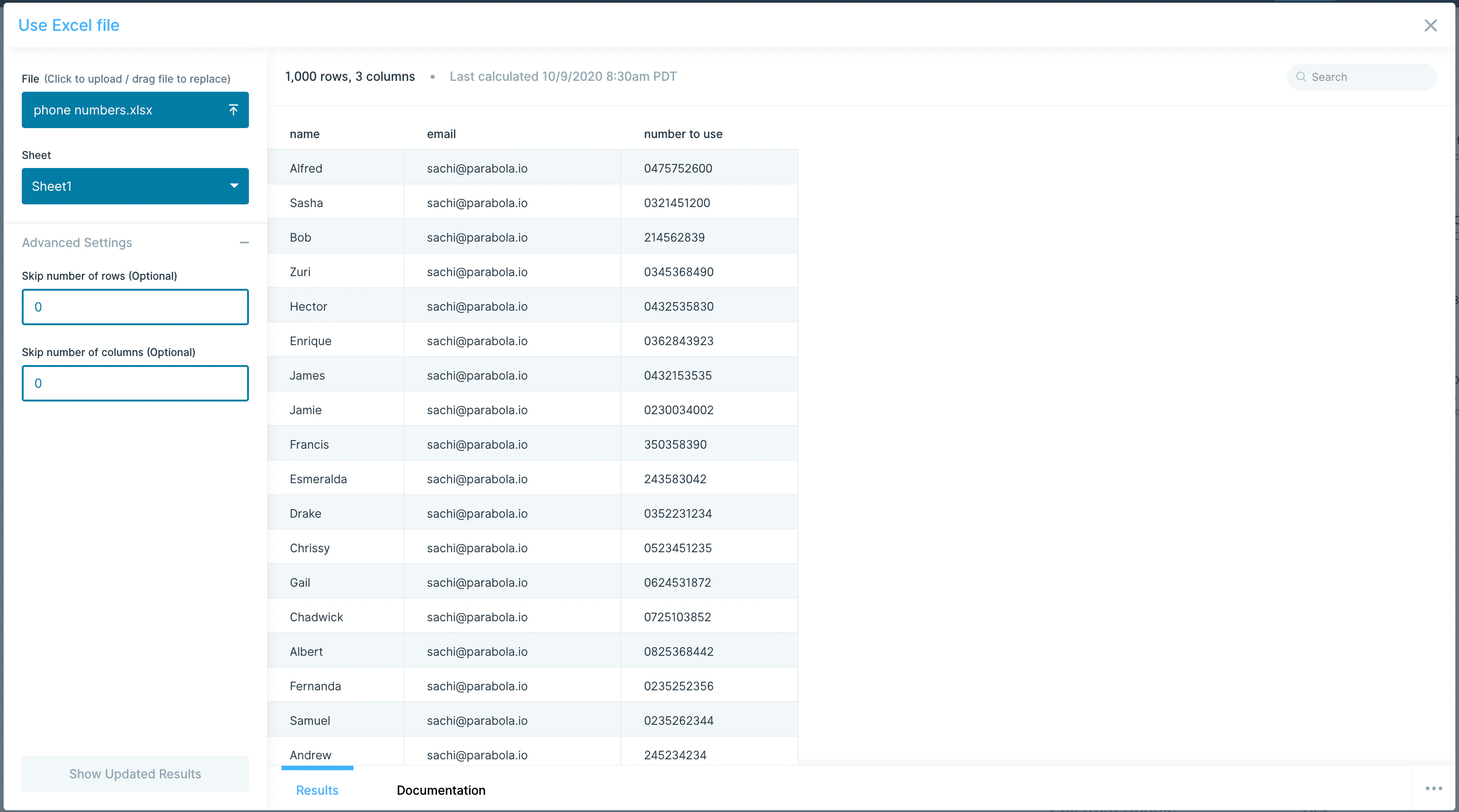
The Pull from Excel file step pulls tabular data from a single sheet in an Excel workbook you upload.Configuration
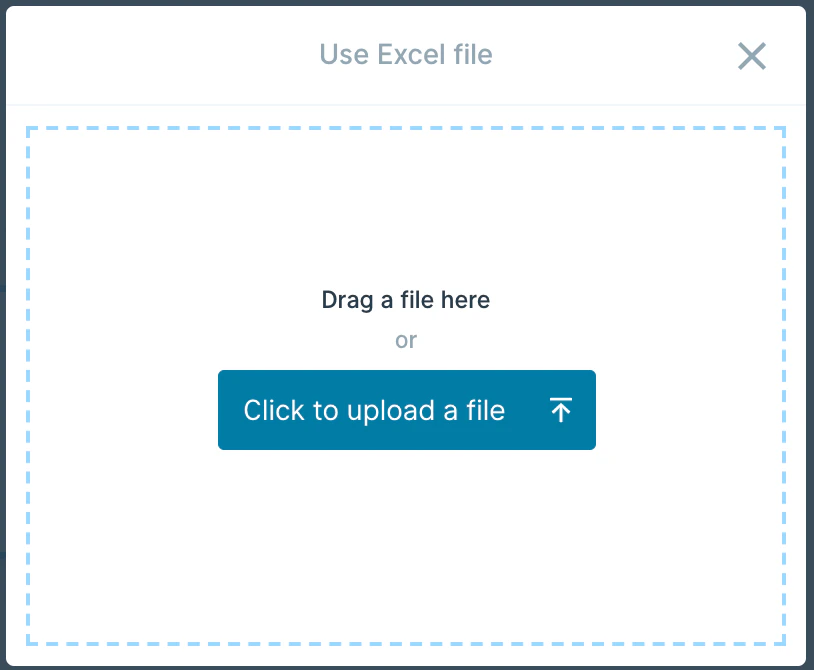
ClickClick to upload a file (or drag a file onto the canvas).
Helpful tips
- Files don’t auto-update. If you change the original file on your computer, re-upload it. For live updates on each run, use Pull from SharePoint, OneDrive, or Google Drive.
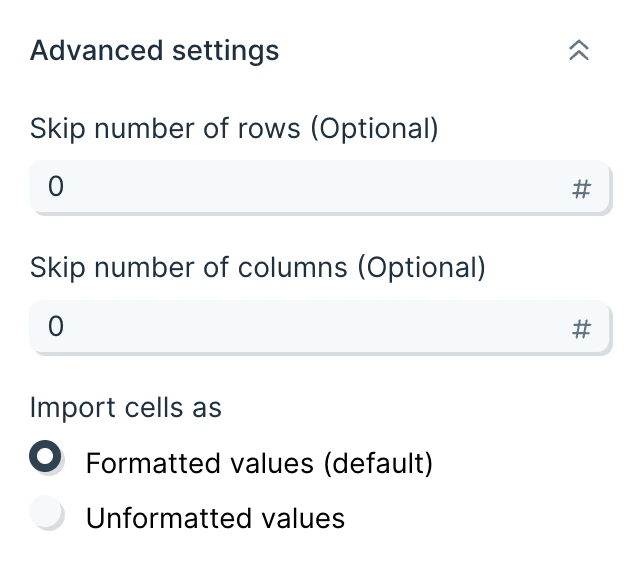
- Formulas and formatting are stripped on upload. All formulas are converted to their values; cell formatting is dropped.
- Storage and security. Uploaded files are stored in an Amazon S3 bucket. Connections use SSL and are encrypted.
Generate Excel file
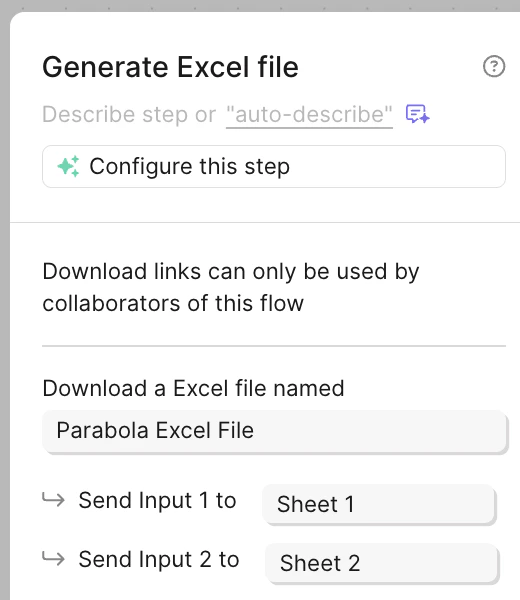
The Generate Excel file step exports the data flowing into it as an.xlsx file. It can take multiple inputs — one per sheet — and the file is delivered to the flow owner’s email address as a download link.
Configuration
Connect a step to Generate Excel file and a preview of the output appears.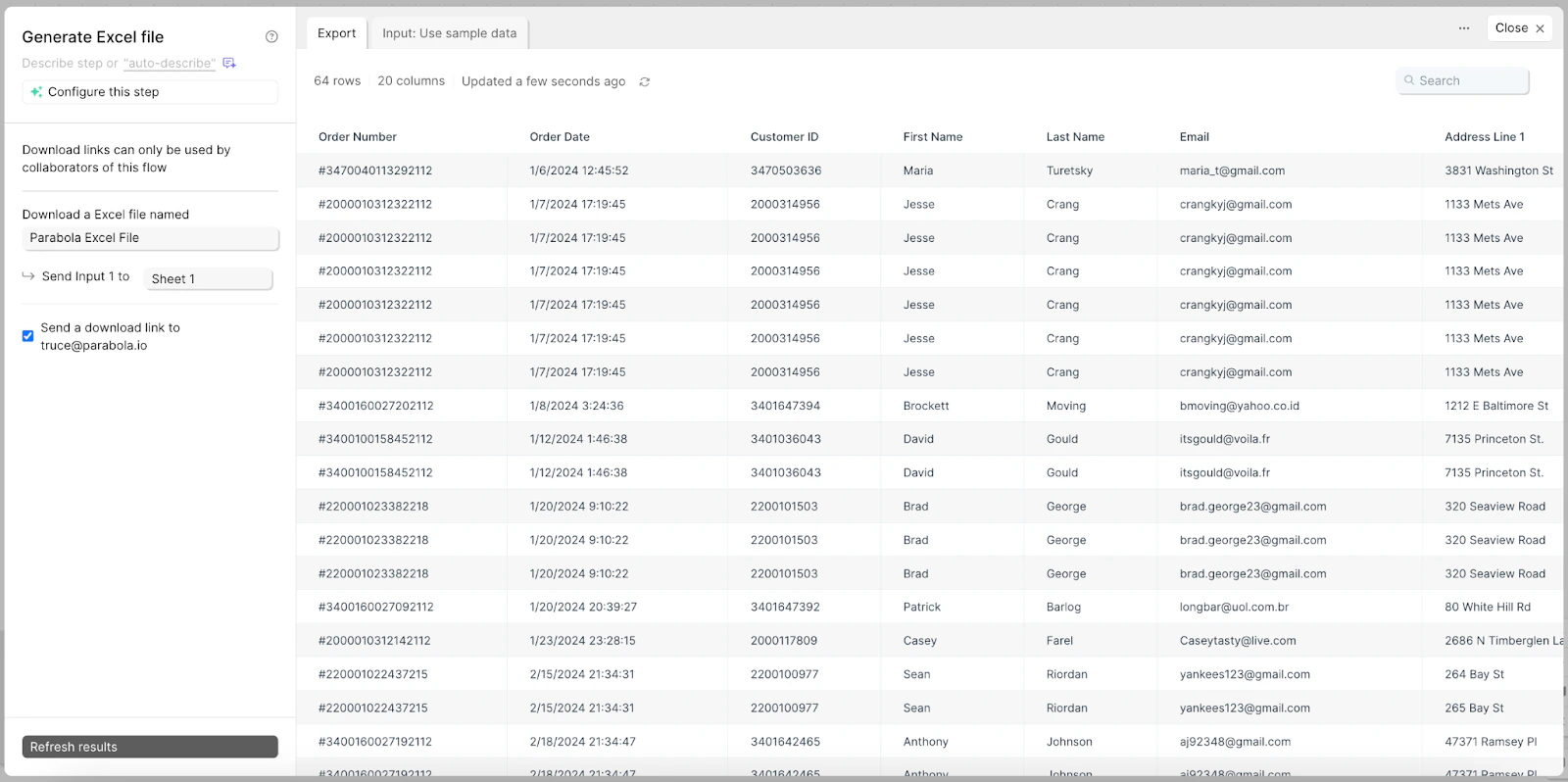
Parabola Excel File. To rename it, type a new name in the box under “Download an Excel file named.”
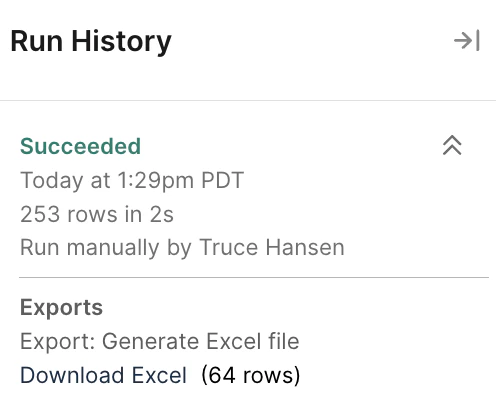
Download Excel.
Helpful tips
- Sheet names are limited to 31 characters. Longer names cause the flow to fail. This is an Excel format constraint, not a Parabola one.
- Zero rows means no email. If the input has no rows, no file is sent.
- Multi-tab beats multi-file. When you need to send several related datasets to the same recipient, use one Generate Excel file step with multiple inputs instead of multiple Generate CSV file steps.
- Files are stored in S3. Generated files persist in an Amazon S3 bucket so they reload when you open the flow. Connections use SSL and are encrypted.
Related steps
- Generate CSV file — for single-table exports or when recipients need a CSV
- Email a file attachment — to send the file directly to a recipient list
- Send to Google Drive — to write the file to a shared folder
- Send to SharePoint — for SharePoint-based workflows
- Stack tables — to merge inputs before export when you want one sheet instead of many